October 9, 2026
Bark Beetle Signs in Prescott Pines
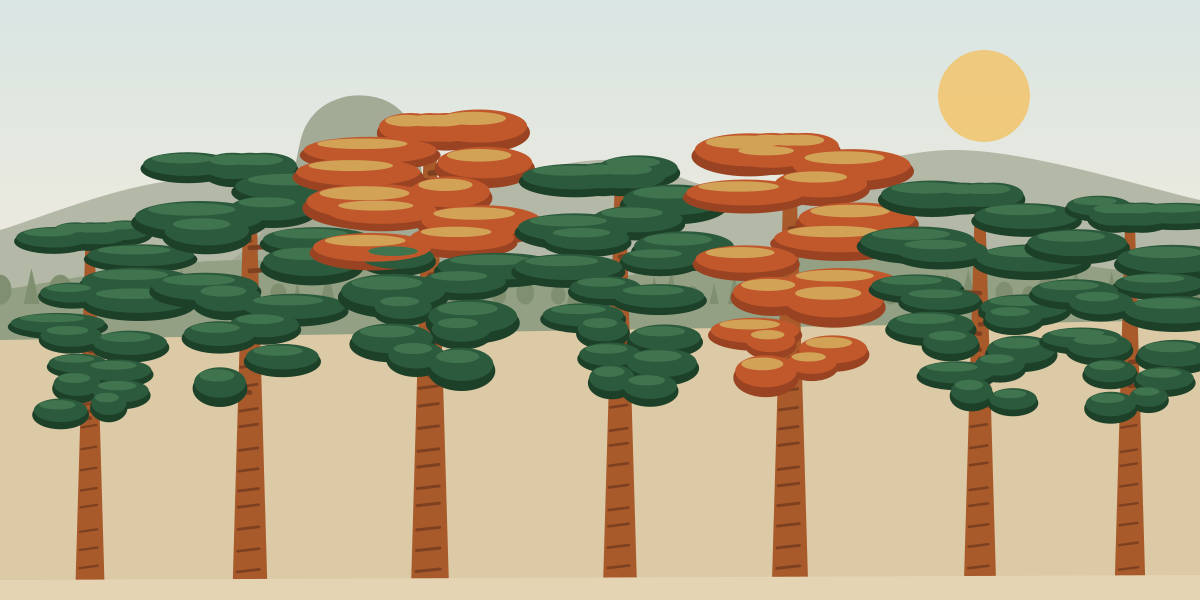
Every few years, after a dry winter and a slow start to the monsoon, the hillsides around Prescott start showing rust-colored pines. Nearly always, bark beetles did the killing, and drought set the table. Healthy pines defend themselves by flooding beetle tunnels with resin. A pine that has gone months without real moisture can’t make enough resin, and the beetles win.
Around Prescott, the Prescott National Forest and University of Arizona extension staff name two beetles as the most common attackers of ponderosa pine: the Arizona fivespined ips and the pine engraver. Pinyon pines have their own pinyon ips. All are native, and all are small, about the size of a grain of rice. You’ll rarely see the beetles themselves. You’ll see what they leave behind.
Signs on the trunk
Walk all the way around the tree and look closely at the bark, from the root flare up as high as you can see. These are the signs to look for:
- Pitch tubes. Small blobs of sap, roughly the size of a popcorn kernel, where the tree tried to push a beetle out. White or cream ones are fresh; reddish ones with dust mixed in mean the beetle got in.
- Boring dust. Fine reddish-brown dust, like sawdust, caught in bark crevices and around the base of the trunk. With Ips beetles this is often more obvious than pitch tubes.
- Exit holes. Tiny round holes in the bark, about the size of a pencil lead, where a new generation has flown out.
- Woodpecker work. Patches of bark flaked off by woodpeckers going after larvae underneath.
Signs in the crown
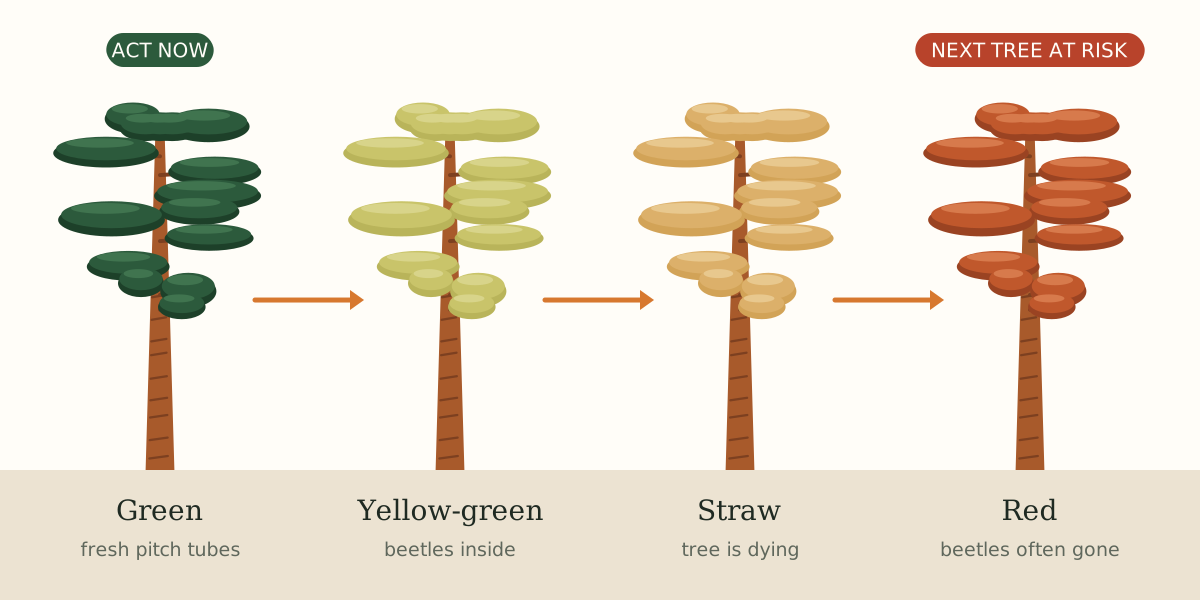
The crown tells you how far along the attack is. Ips beetles often start high in the tree, so fading may begin at the top and work down.
- Green with fresh pitch tubes: under attack now. This is the stage where action helps most.
- Yellow-green to straw: the tree is dying. Beetles are still inside, developing.
- Red or rusty brown: the tree is dead. By now, many of the beetles have often already flown to attack the next tree.
That last point matters. The red tree everyone notices is often no longer the source of beetles. The green tree next to it, with fresh pitch tubes and boring dust, might be.
What to do next
For a pine that has turned red or brown, plan to remove it within a few months, especially if it’s near the house, a road or a driveway. Dead pines turn brittle fast, and a pine that has stood dead for a year is harder and more expensive to remove safely. See our page on dead pine removal.
For wood from an infested pine, keep it away from living pines. Yavapai County extension guidance is to chip it, haul it away, or split and stack it in full sun under clear plastic for several weeks so the heat kills the brood inside. Don’t stack green pine firewood against a healthy ponderosa.
For the neighbors of a dead pine, look them over for fresh pitch tubes and boring dust. A lightly attacked tree that’s still green may survive with help.
For pines you want to keep, water is the best defense you have. During a dry spring or fall, give them a slow, deep soak around the dripline, the outer edge of the branches, once or twice a month. A soaker hose left on low for a few hours works well. Thinning crowded stands helps too, because trees that aren’t competing for water fight beetles better.
For high-value trees, preventive insecticide sprays exist and are applied before beetle flight by licensed pest control applicators. They’re worth asking about for a prized pine next to an infested one, but they won’t save a tree that’s already fading.
Timing your pruning
Fresh cuts on pines release the scent of pine sap, which draws beetles from a distance. That’s why pine pruning around Prescott is best done in late fall and winter, when beetles are inactive, and why fresh pine slash shouldn’t sit in piles through spring and early summer. Chip it or haul it promptly. More on that in our tree trimming and brush chipping pages.
What about junipers?
Junipers have been dying around Prescott in recent dry years too. In 2025, University of Arizona extension staff looked at dying junipers north of Prescott and found drought, not insects, to be the main cause. Stressed junipers can attract bark beetles later, though, and dead junipers near homes are a fire risk either way.
Not sure what you’re looking at?
Call (928) 766-TREE. We’ll line up a local tree company to look at your pines, tell you which ones can be saved, and quote the ones that can’t. For a second opinion on a valuable tree, the Yavapai County Cooperative Extension office is also a good resource.